Pods
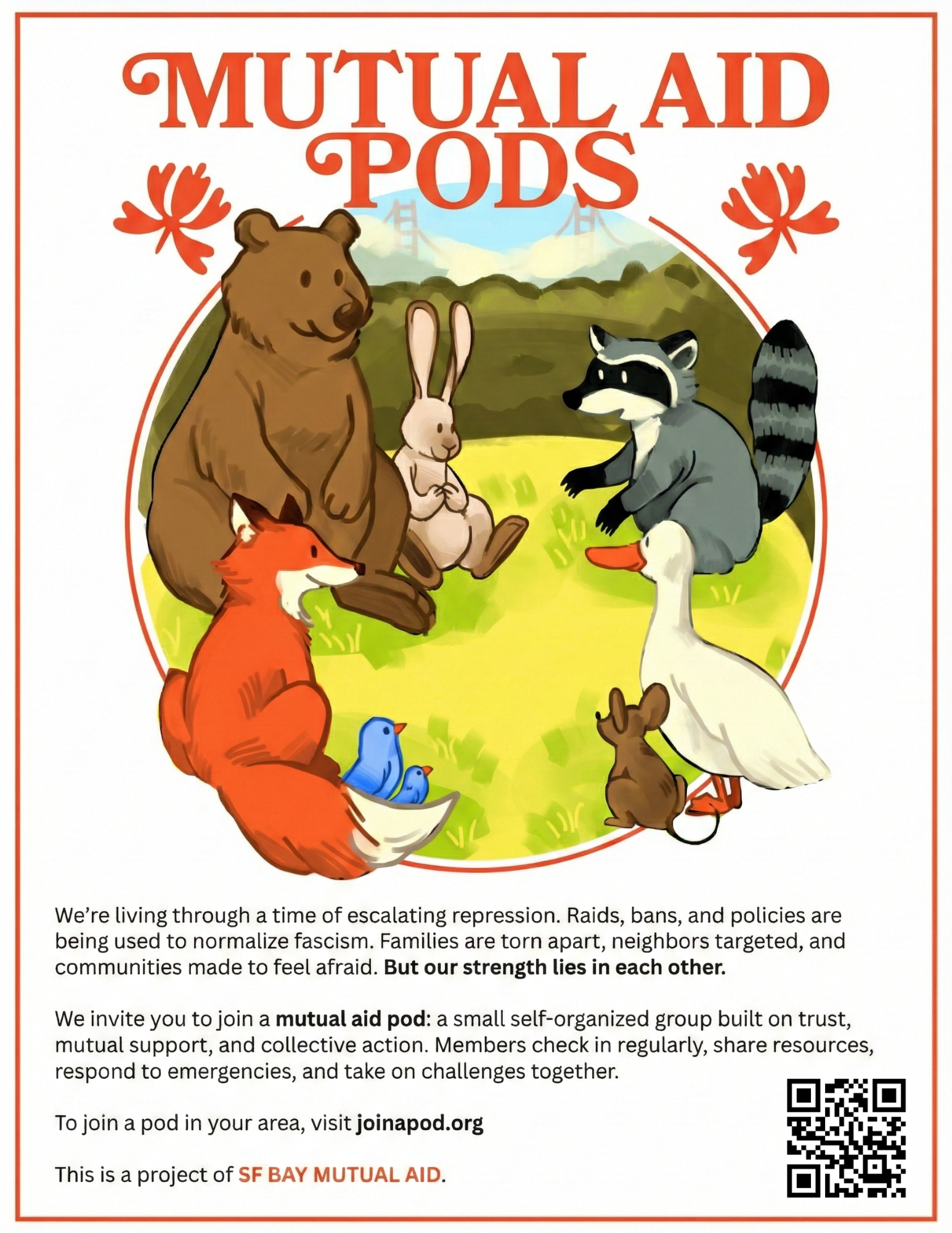
Pods are small, peer-led groups built on trust, solidarity, and collective resistance.
Each pod, usually 4 to 25 people, comes together regularly to support one another, share resources, and take action. Actions might include anti-ICE organizing, neighborhood flyering, offering emergency support to targeted families, hosting political education workshops, joining strikes, or creating spaces for mutual care and connection.
At their best, pods don't just protect each other; they ripple out to strengthen neighborhoods, cities, and wider movements, becoming the building blocks of large-scale civil resistance.
Joining a Pod
Foundations of a Pod
1. Shared Purpose and Values
The group is grounded in a common purpose and shared values like care, solidarity, and collective
resistance.
2. Mutual Aid
Everyone gives and receives support, meeting each other's material needs through trust and
reciprocity.
3. Shared Vulnerability
People feel safe to be real—sharing emotions, struggles, and truth without fear of judgment.
4. Relational Trust and Accountability
Trust is built through consistency, clear agreements, and following through on what we say we'll
do.
5. Conflict Transformation
When tensions arise, the group stays in relationship and works through conflict with curiosity and
care.
6. Collective Decision-Making
Power is shared, roles are flexible, and decisions are made collectively and transparently.
7. Consistency and Ritual
Regular gatherings and shared rituals create a rhythm that deepens connection over time.
8. Joy, Play, and Beauty
Laughter, creativity, and celebration are essential parts of how we survive and thrive together.
Resistance for the Long Haul
Civil resistance is not just about dramatic moments of protest. It is about sustained, collective refusal and creation over time. This kind of long-term action requires trust, resilience, and a sense of belonging. And those qualities are difficult to build in isolation.
Pods offer a structure for mutual care, political alignment, and shared risk. They make it easier to stay committed when things get hard, to process fear or burnout, and to coordinate action with others who know and support you. Being in a pod helps turn scattered outrage into rooted resistance.
Pod Resources
New Pods
Keeping Pods Thriving
Growing Pod Movement
Mutual Aid
Flyering
Other Resources
- Collaborators (This is a site that helps people find collaborators)
- Psychological/Emotional Mutual Aid
- Peer Interviewing

This is a project of SF Bay Mutual Aid. If you don't live in the bay area and want support starting a pod program in your city, fill out the form on this page.